
The first pictures I want to share are from Somiedo, a mountain area in Northern Spain where they use Broom to thatch their haybarns.
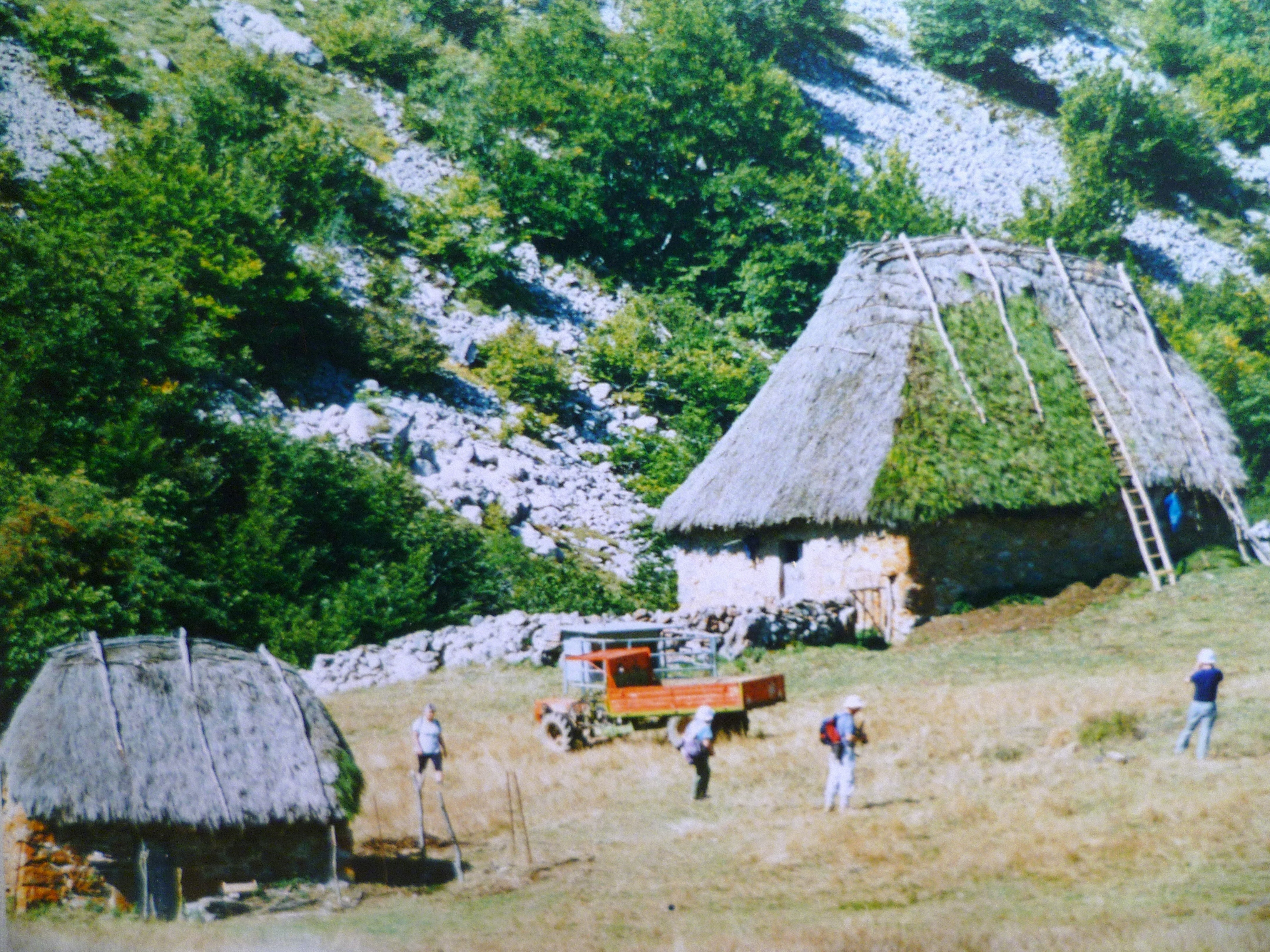
I particularly appreciate the roof frames they use to weigh down the ridges. I think many of the medieval thatched roofs in Britain, would have looked like this. Whether they were done in heather, straw, rushes, sedge or reeds, a rough frame like this would hold down the ridge with far less fuss and effort than today’s methods. When the thatch had rotted the frame would be reused or easily replaced.
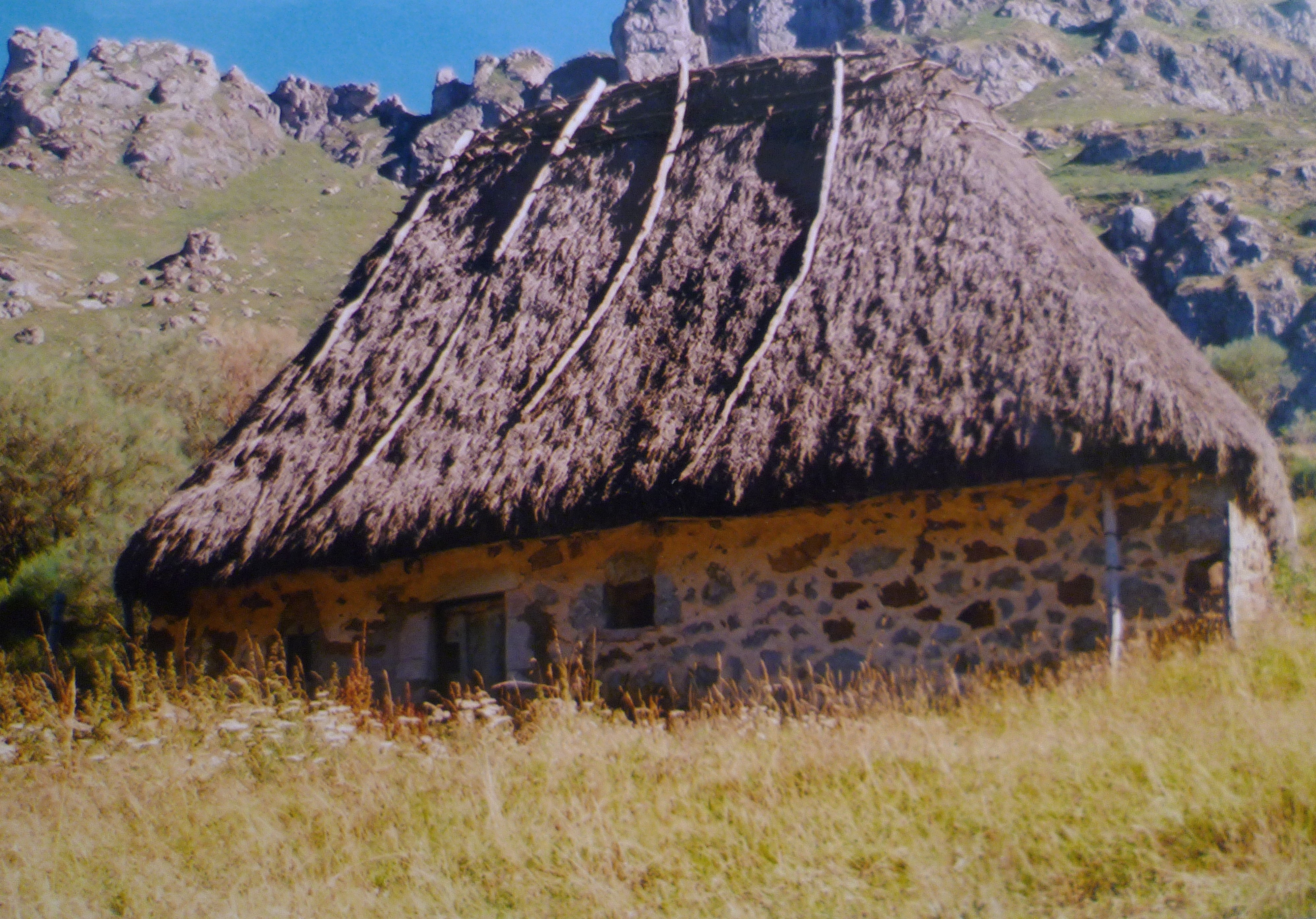
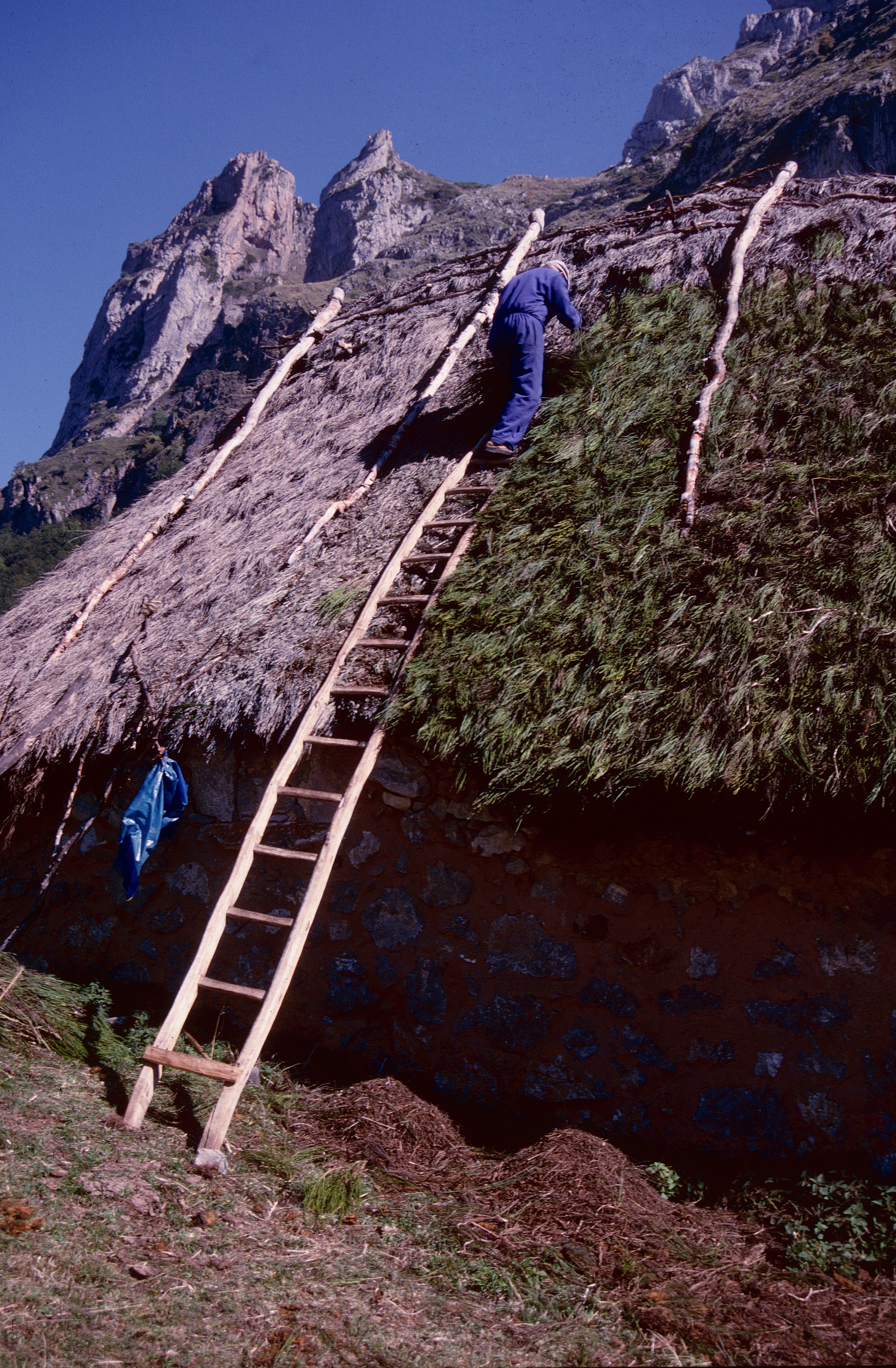
As with lots of traditions, the roofs were repaired annually, the worst wear being renewed with whatever materials were available….
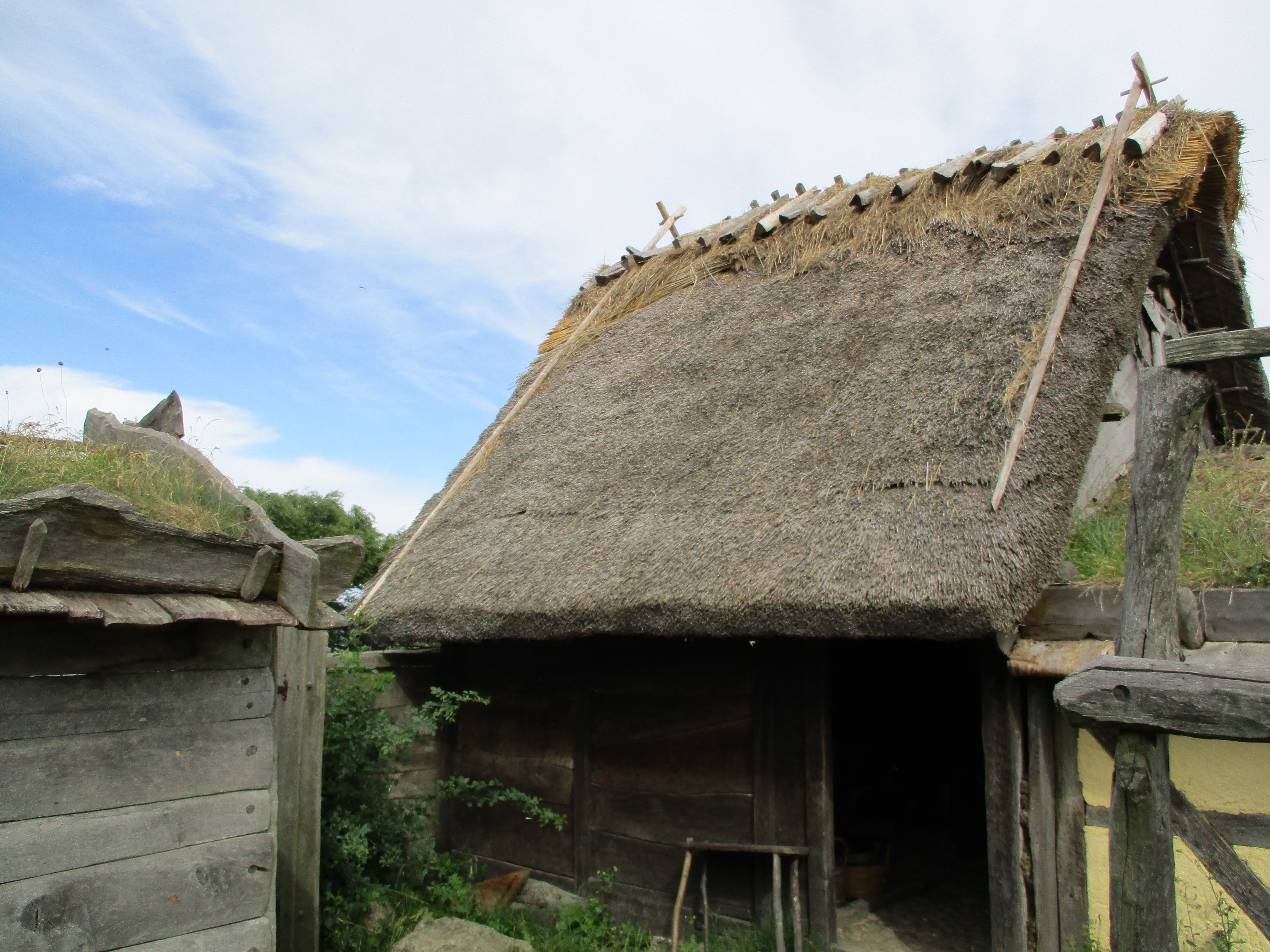
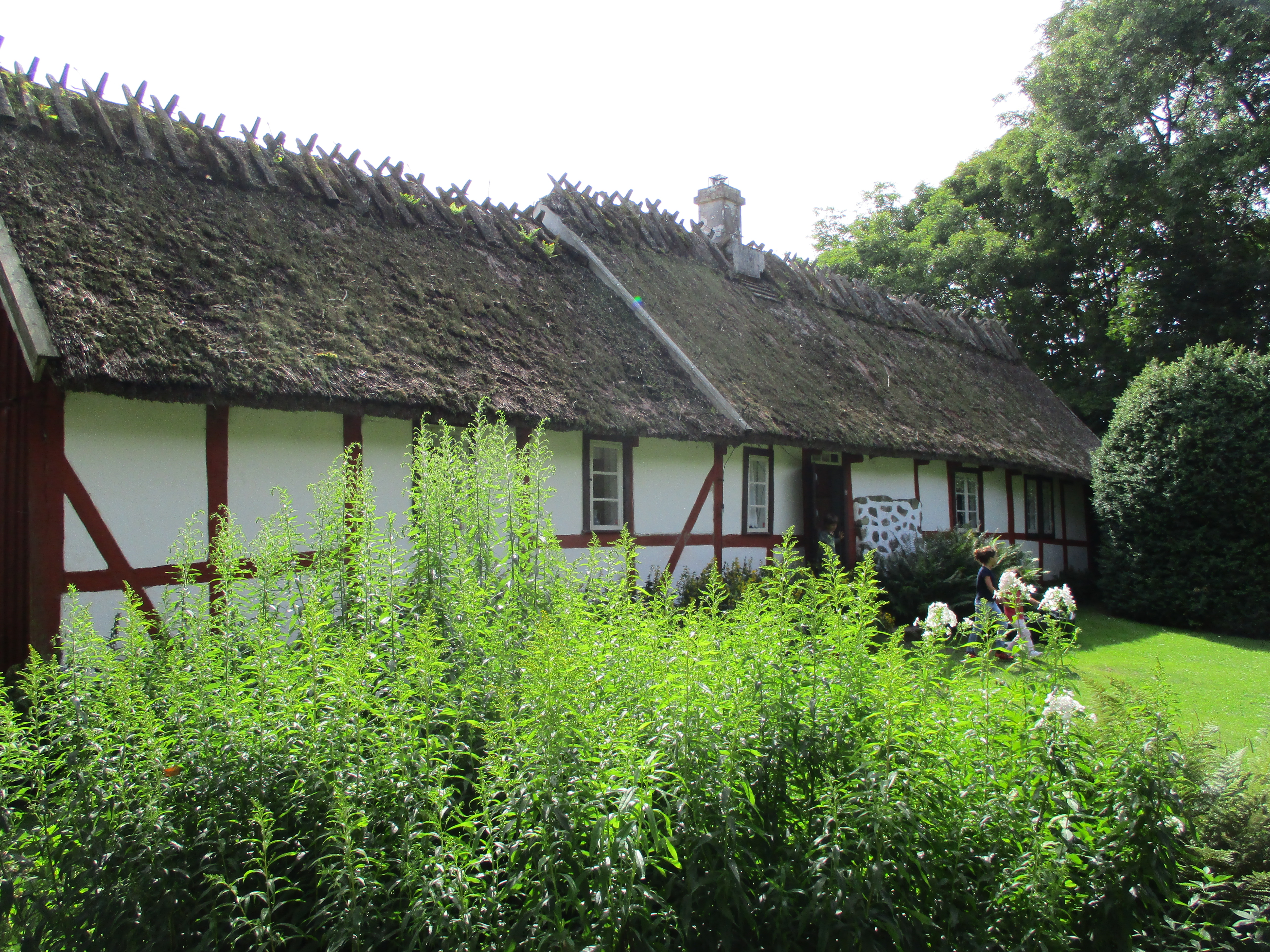
Below is a picture of a house at Fotviken- a ‘viking community’ near Malmo, Sweden. The whole place was made of buildings that were quite interesting including other viking age roofing techniques involving birchbark, split logs and sods of turf, all of them done with obvious care and attention. When i went there I thought it was past its best. The entire place felt a bit neglected, as though all the idealists and the best craftsmen had moved on. Weeds and cobwebs remain. The modern ‘vikings’ who supposedly ‘live’ here seem to stay in the tin shed and are, I’m told, controversial. I only met one, a fat Norwegian who was fairly unimpressive. But fair is fair… their recent repair of the thatch on this house was pragmatic and sensible.
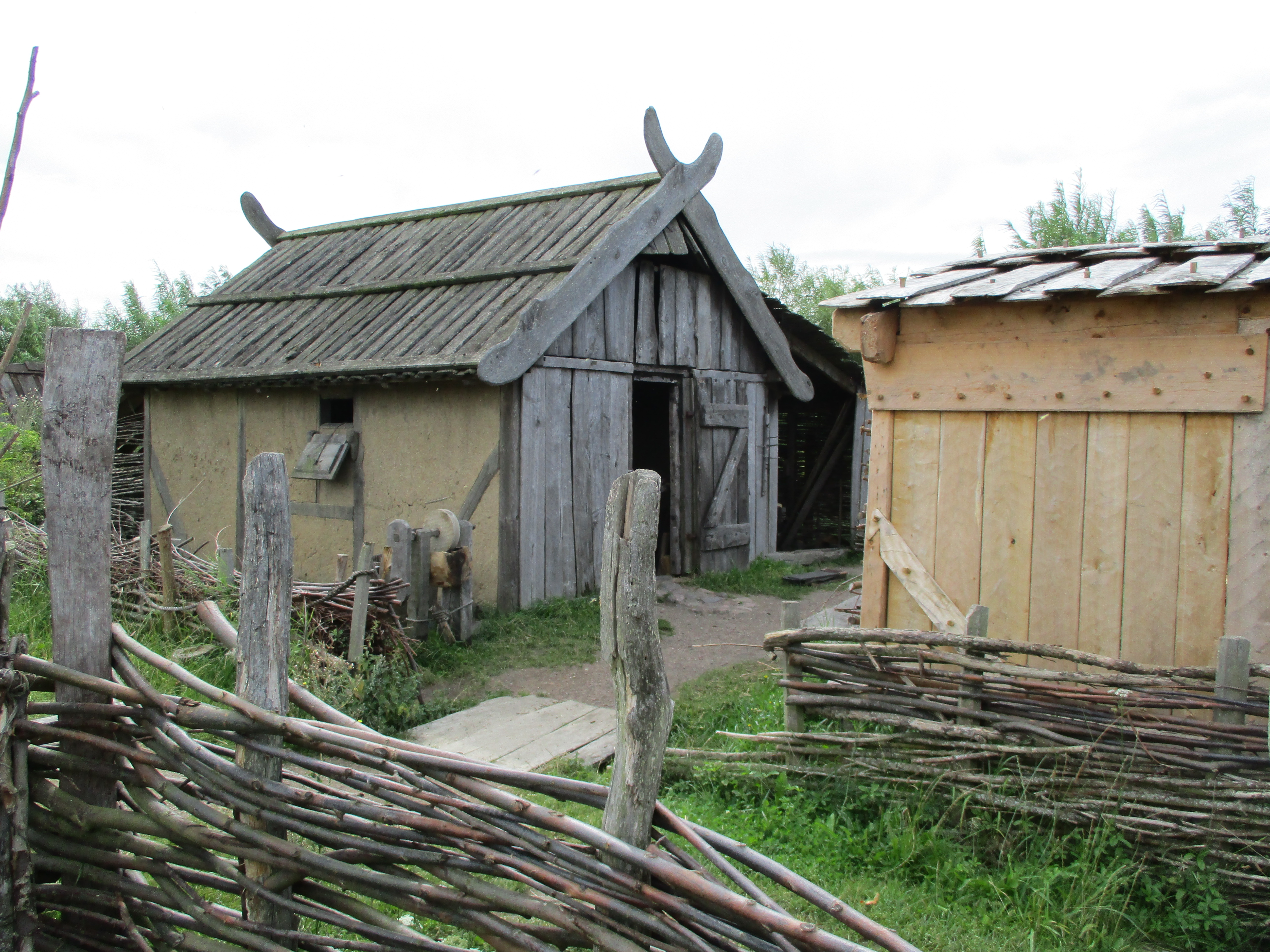
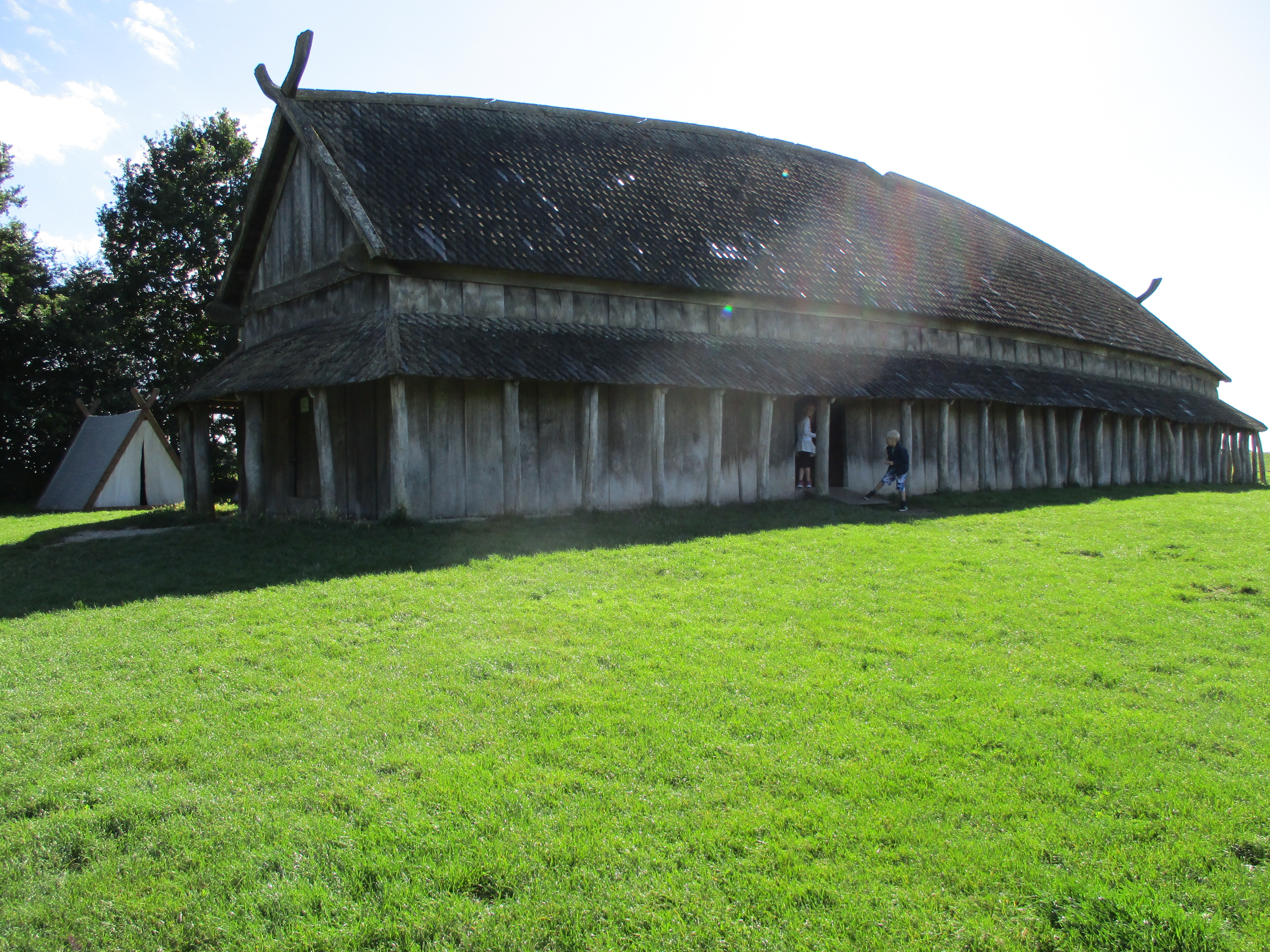
Harold Bluetooth, on the other hand, went for shingles, it would seem.
Here are some rather good ‘Bronze-age’ farm house replicas at the visitor center for the famous engravings of Tanumshede on the west coast of Sweden. There was a great deal to admire here inside and the roof was certainly well made.
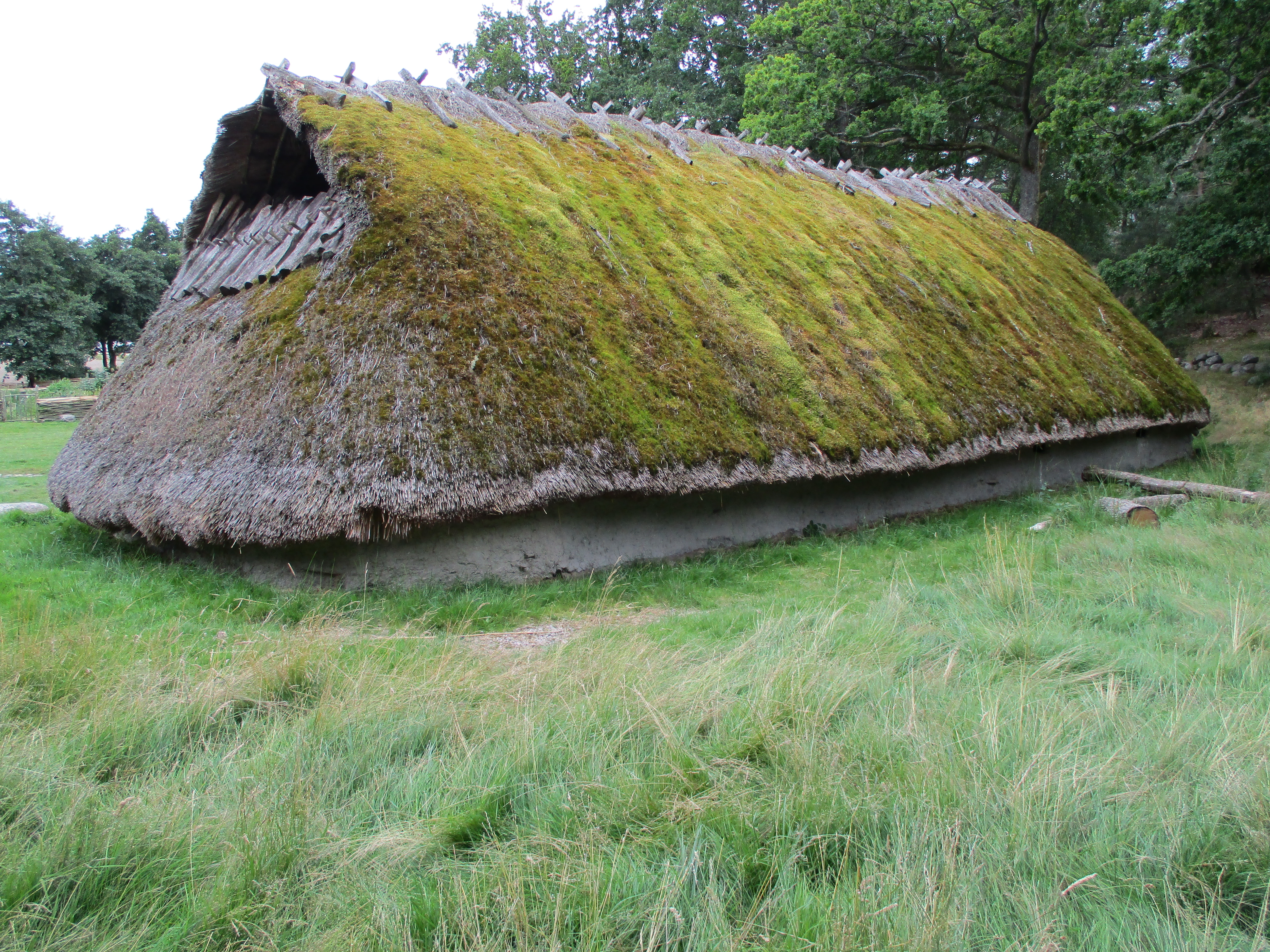
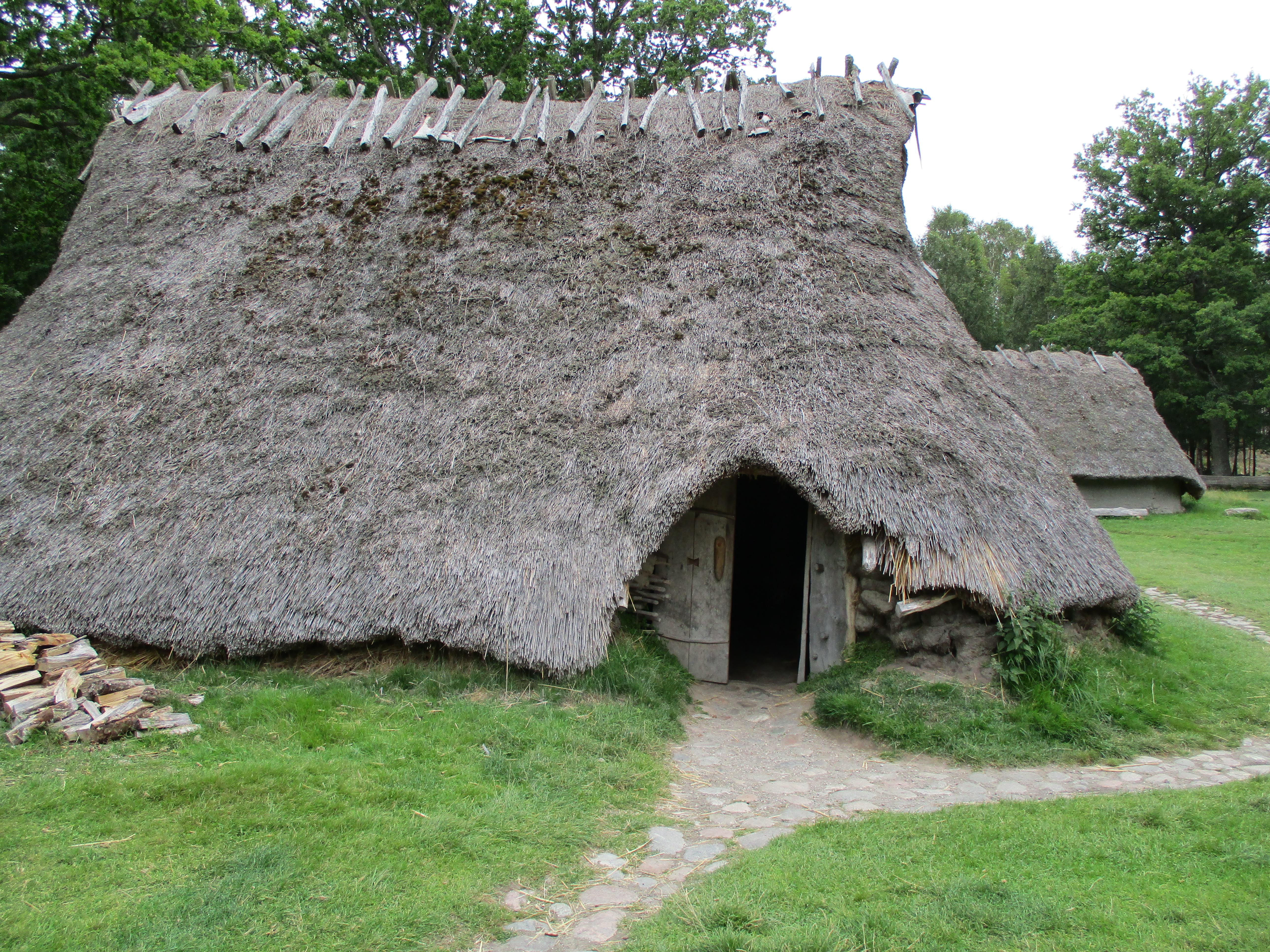
The engravings that inspired this reconstructed farm are truly wonderful. Beaten laboriously into the ice-flattened granite they must have taken the late Bronze age artists a long time. They are certainly not idle doodles. They may have been painted back then, as they are now. Whatever, like much ‘bronze-age weirdness’ they are (mostly) very hard to interpret.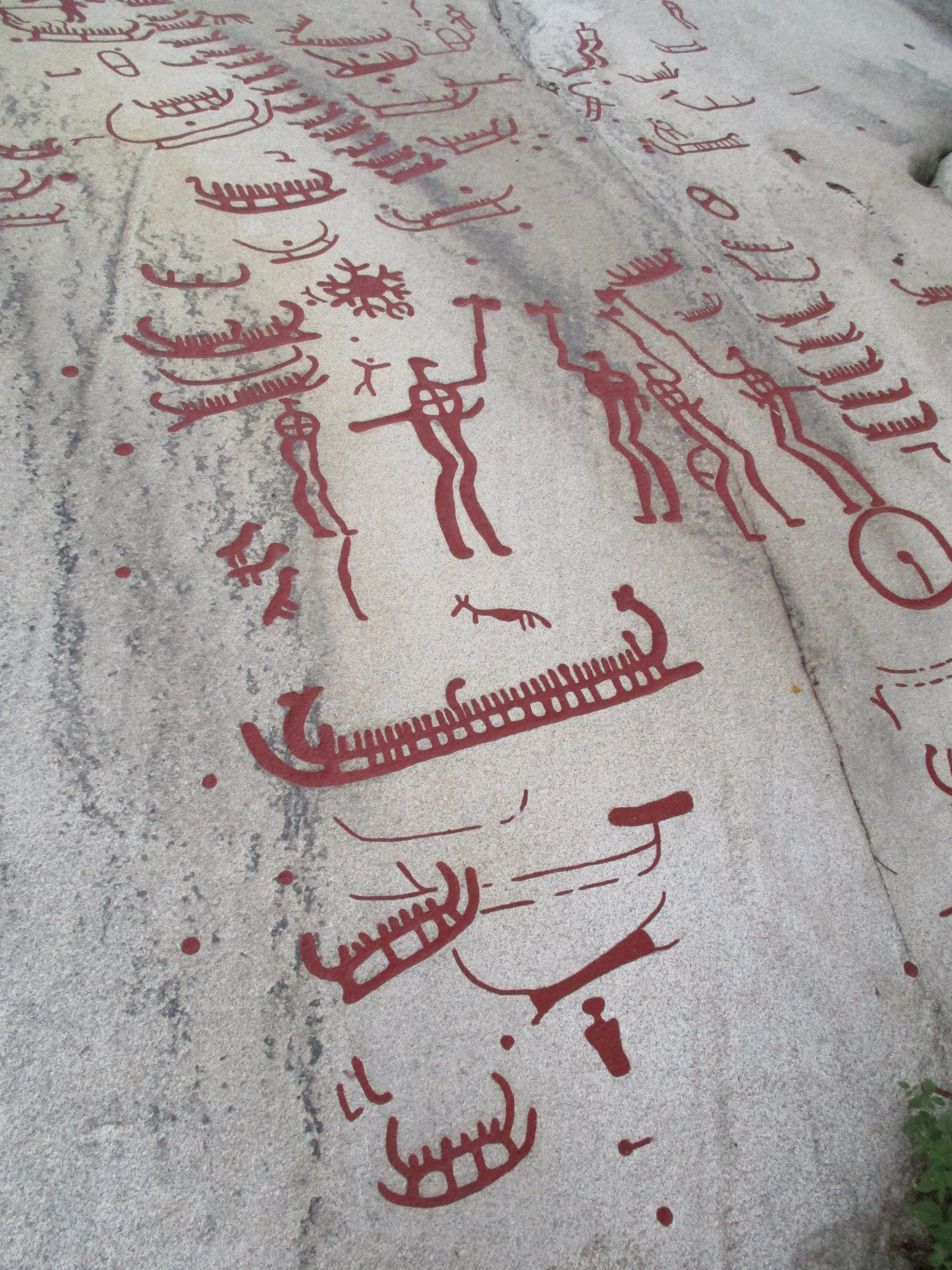
In south Sweden and across the Baltic countries roof frames are still a common way of holding on the ridge.
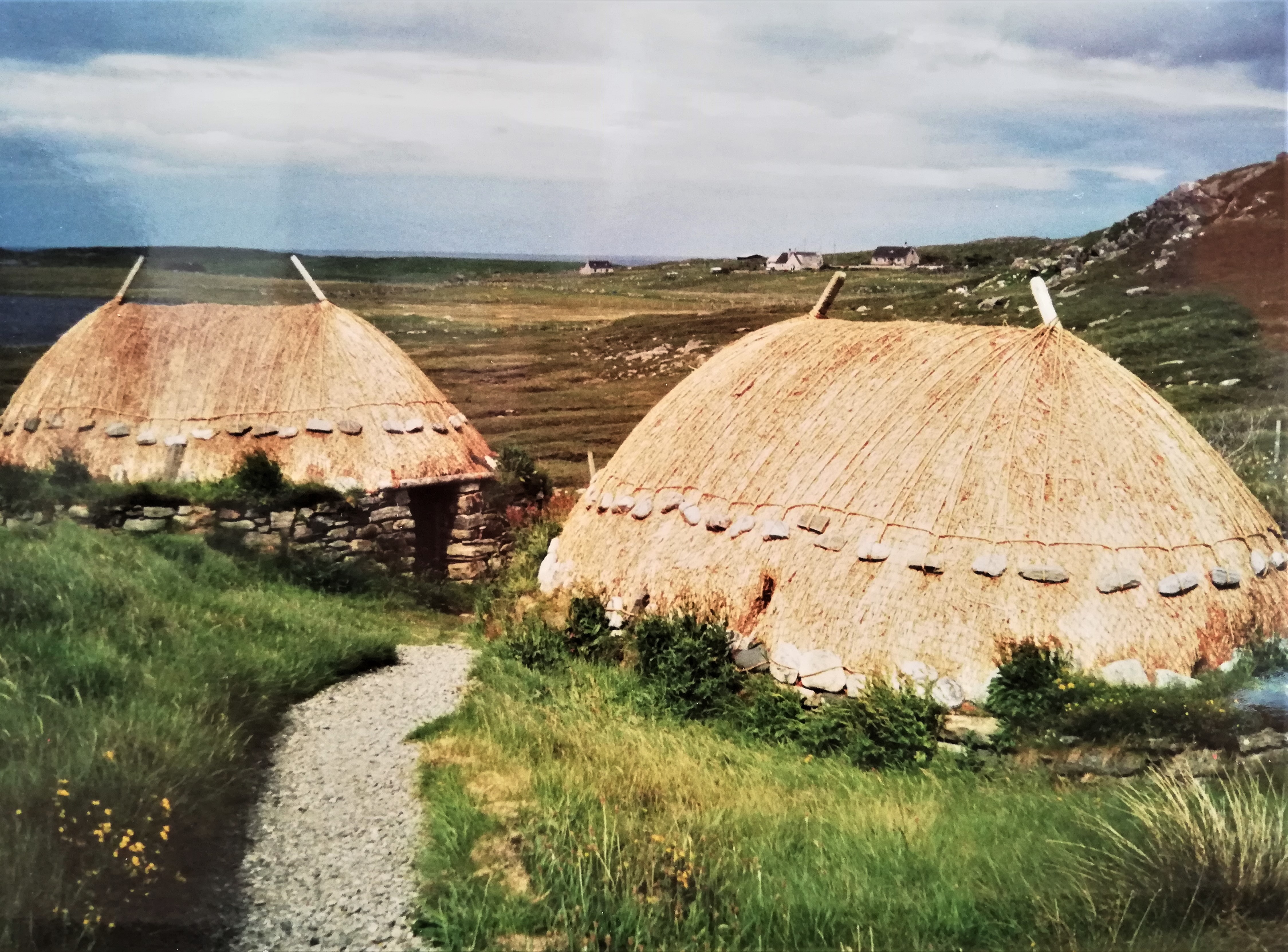
An Iron age settlement reconstruction. Very smart, and showing a clear link to the crofter’s cottages of more recent times.
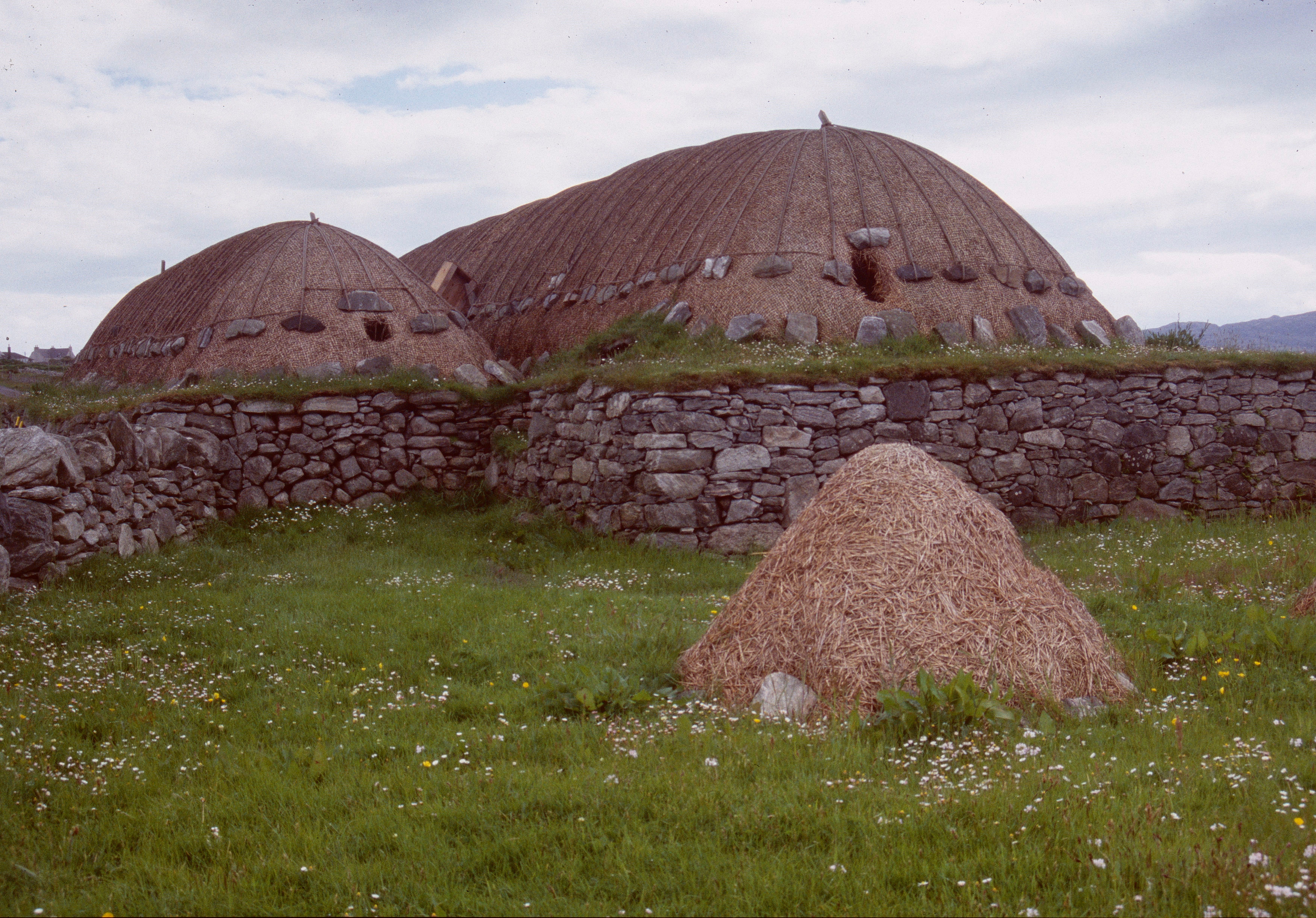
A Blackhouse reconstruction at Arnol in Scotland. Looks like a netted hayrick to me. Not sure. Whatever, the roof will be made first of turf sods, then covered.
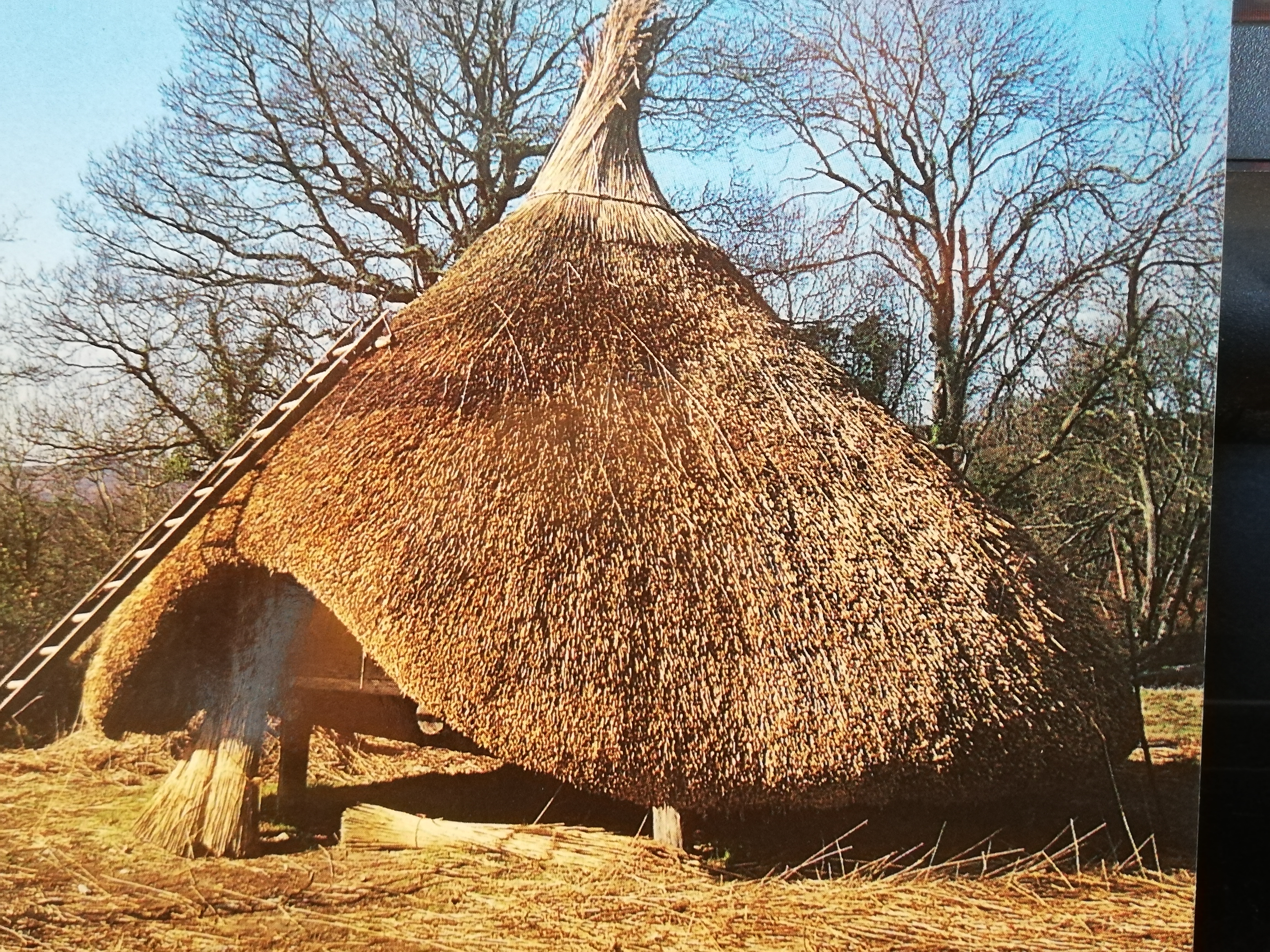
Postcard from Castell Henllys, an iron-age reconstruction village. Looks like water reed and steel fixings.
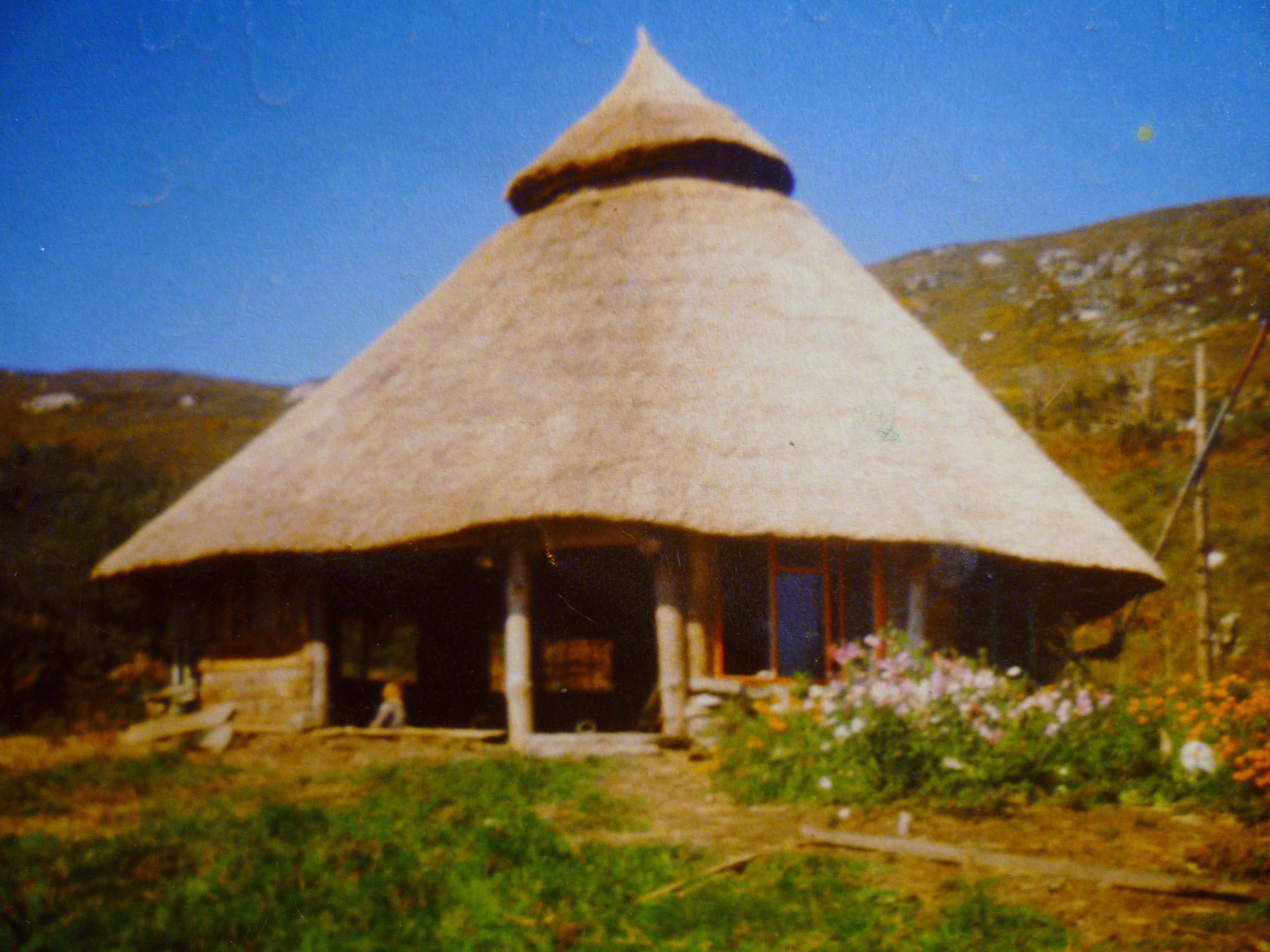
This is my mate, Simon’s, house. He built it on a mountainside in West Cork with what he could gather up from nearby by hand. I helped him a little with the roof. We ran split hazel battens around the rafters and tied hand cut reeds on with baler string, but tarred bark string would have served. He came up with the witches hat as he lived tepee style around a central fire.
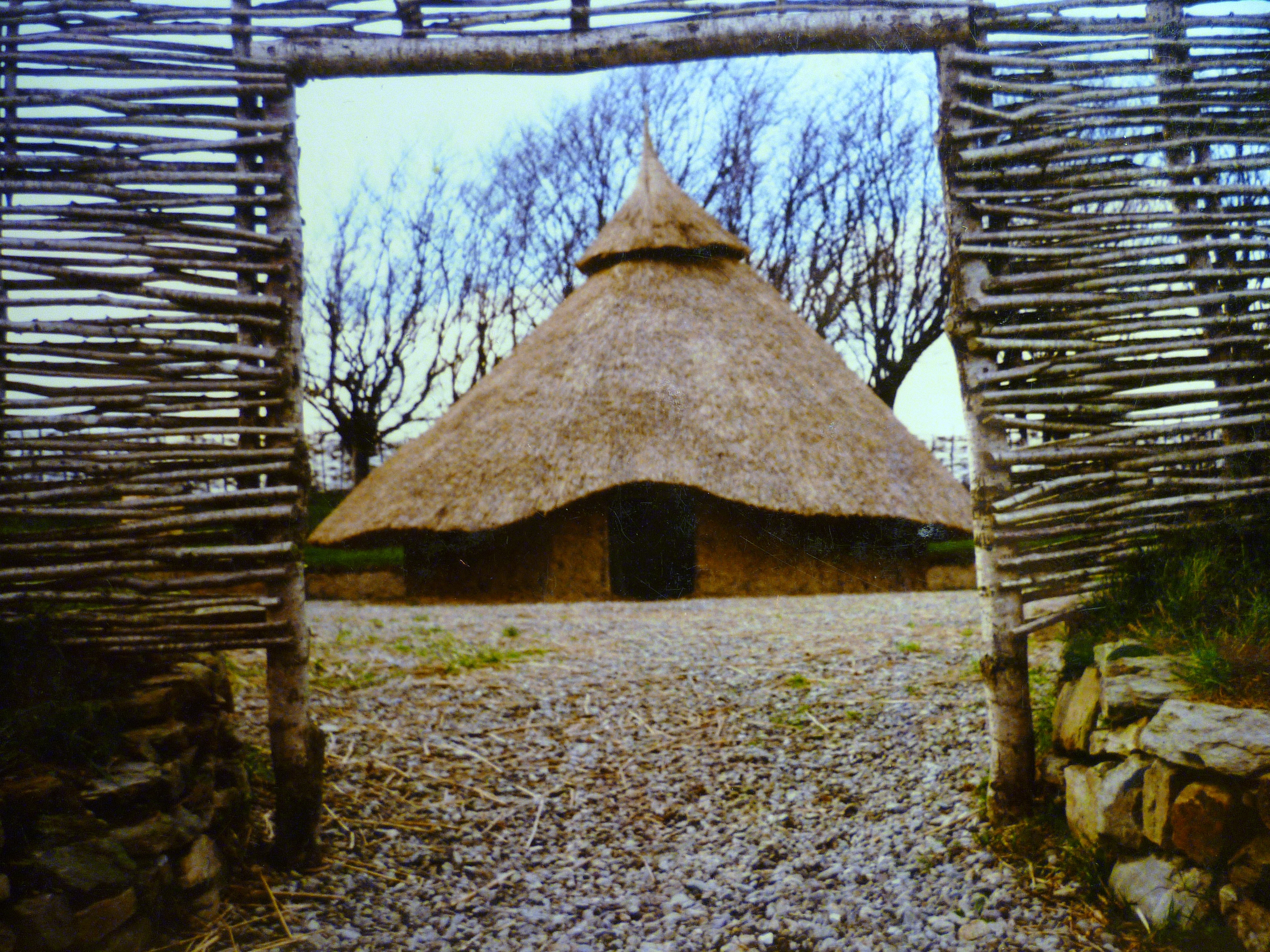
After he built it, thirty tears ago, he was asked to thatch a reconstructed iron-age ring-settlement in the grounds of Clonakilty agricultural college… His work, not mine.
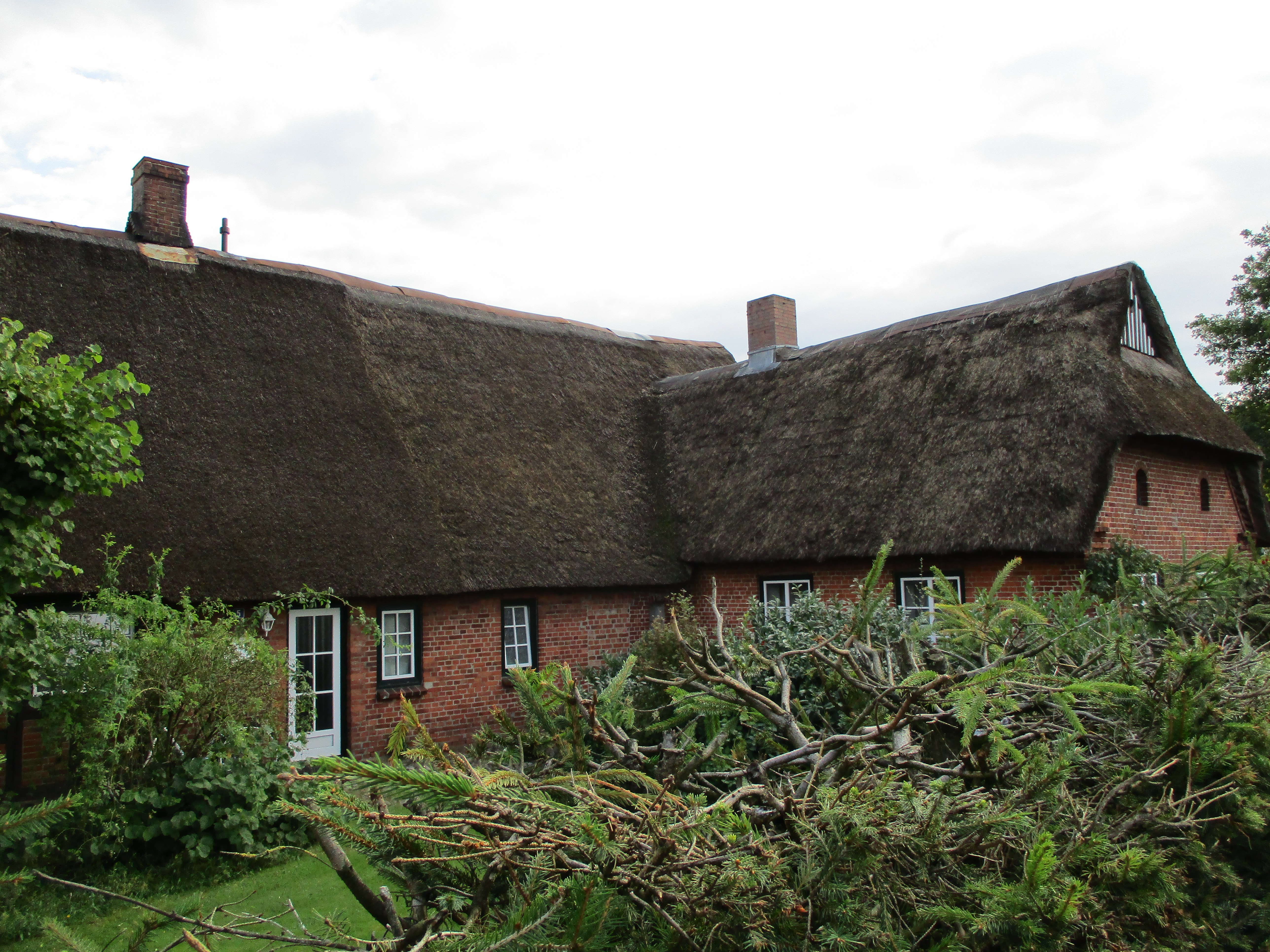
There are lots of water reed roofs in Europe, this one in northern Germany, just south of the Danish border.
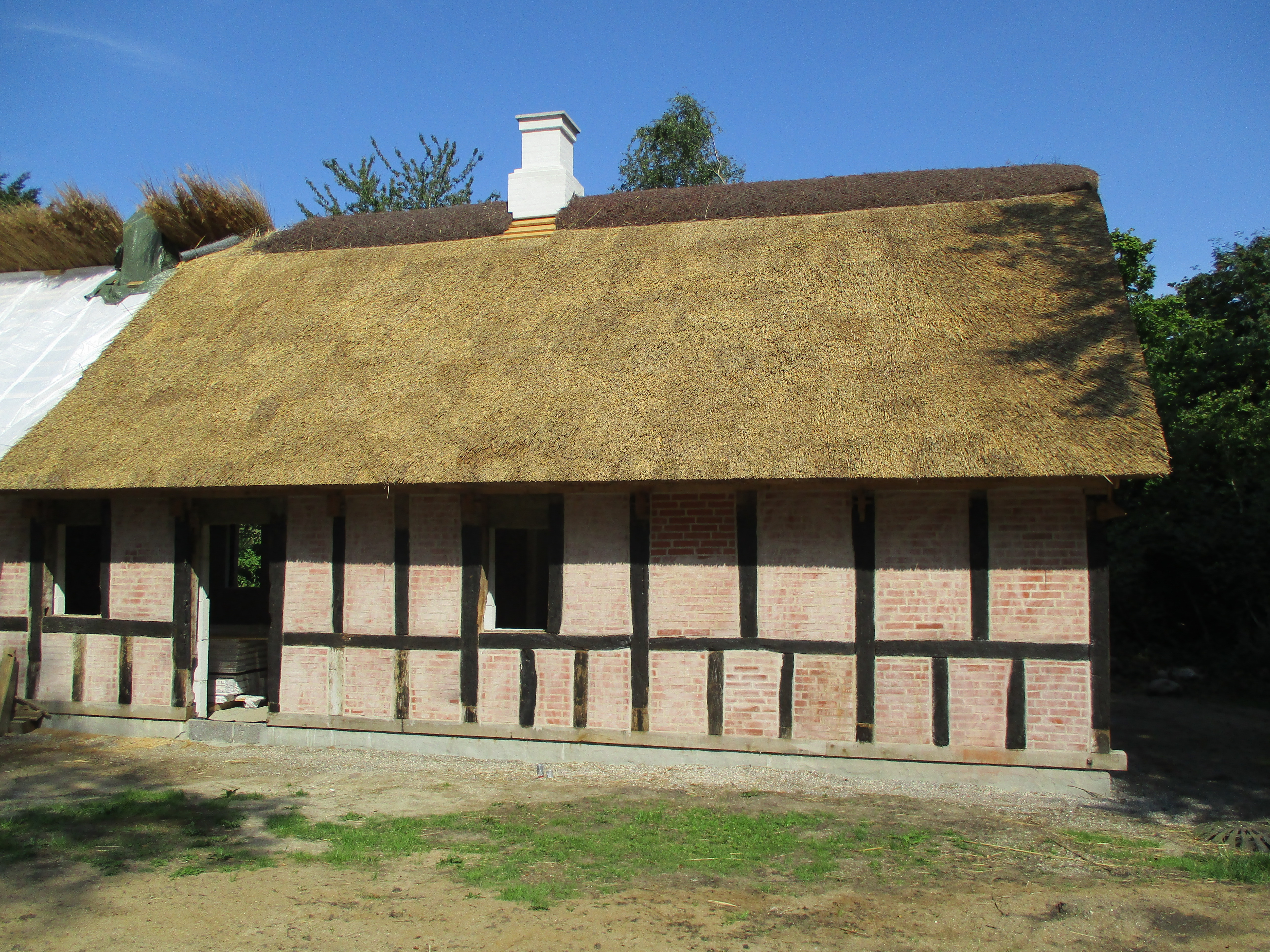
Work in progress on a house extension near Aarhus in Denmark. Again, it is water reed. Screwed down with steel bar and some heather, I think, laid horizontally along the ridge and wired on.
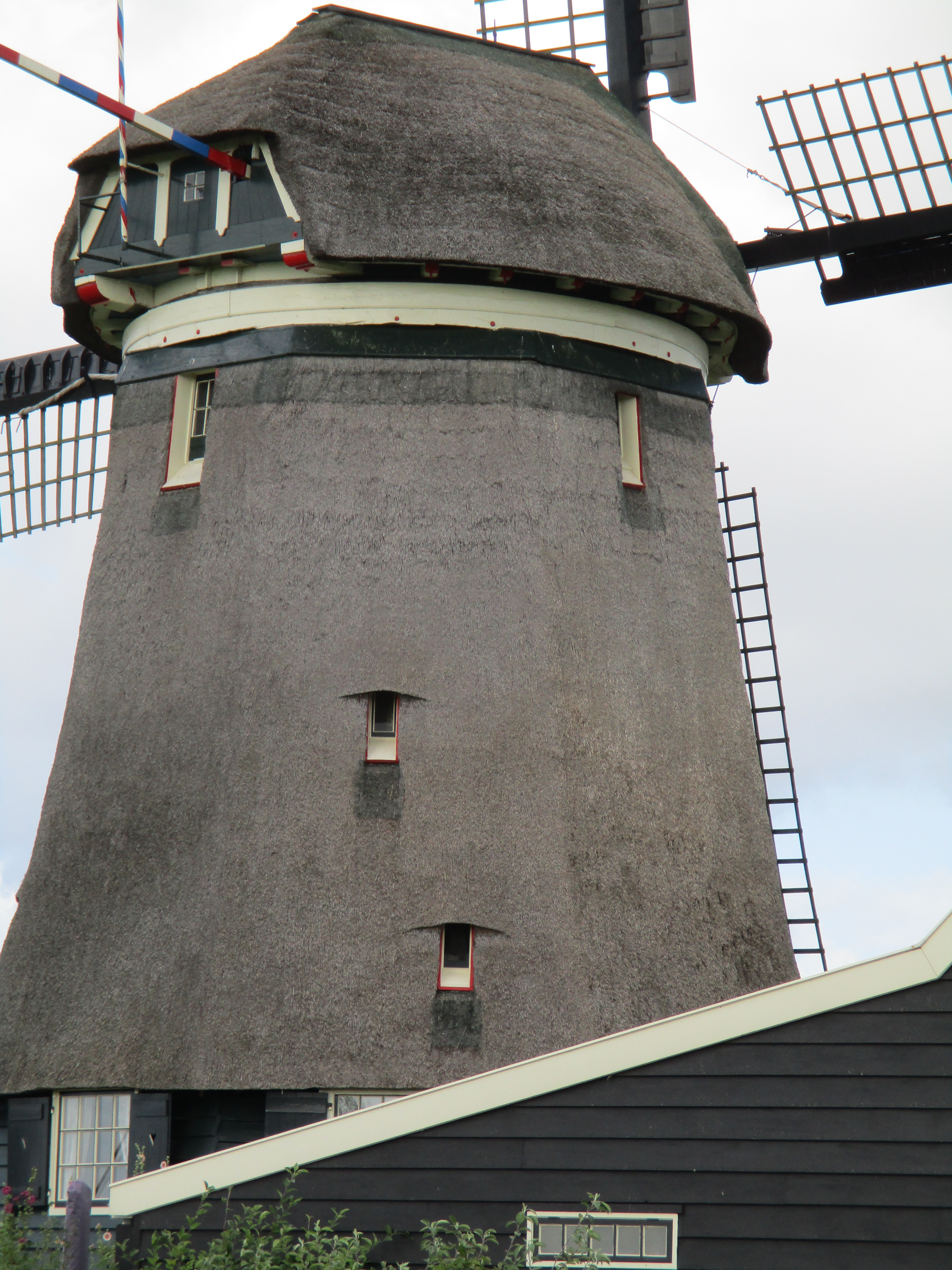
A water reed covered windmill north of Amsterdam…
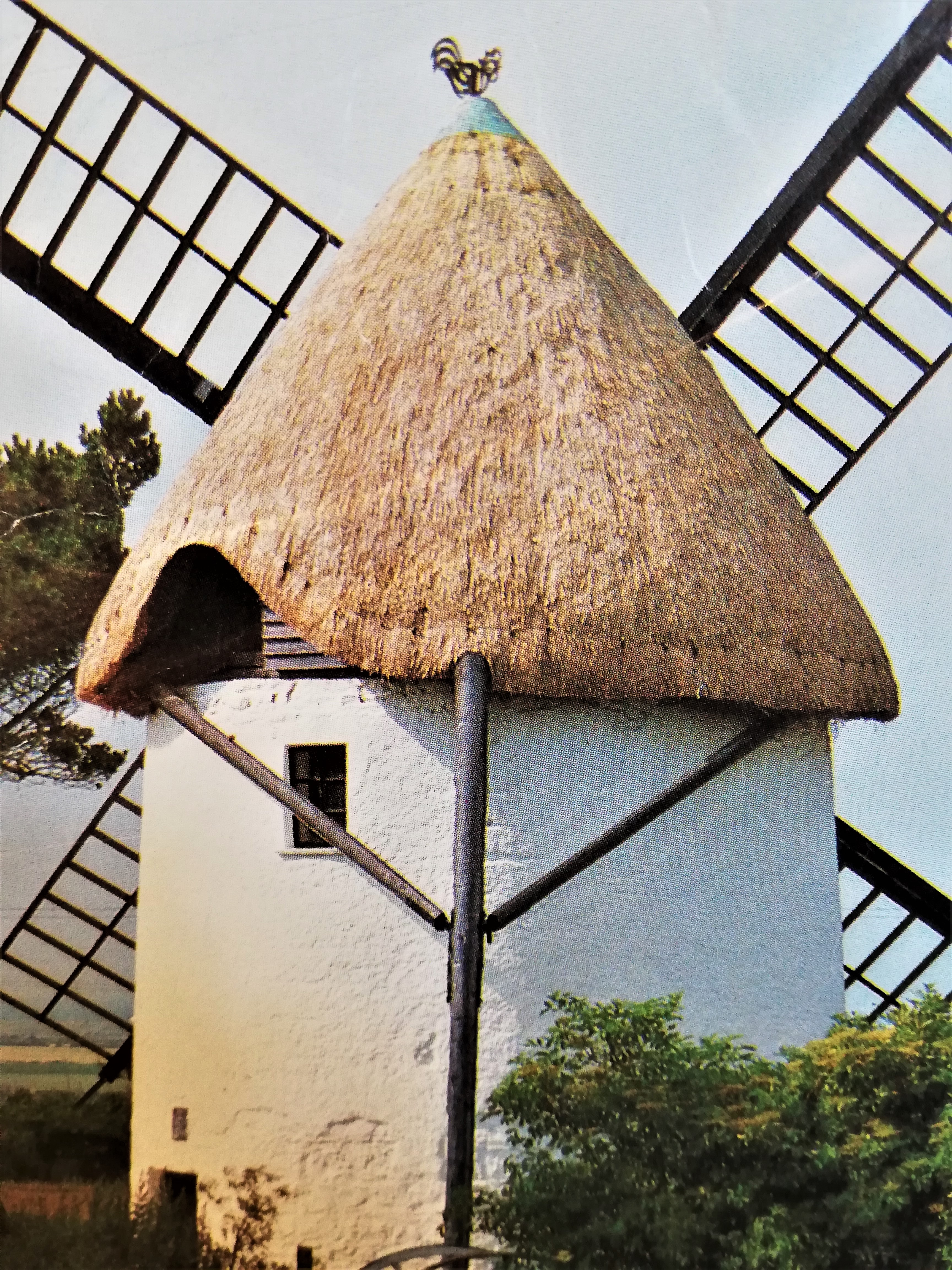
…and a long straw version in Wexford, Eire…
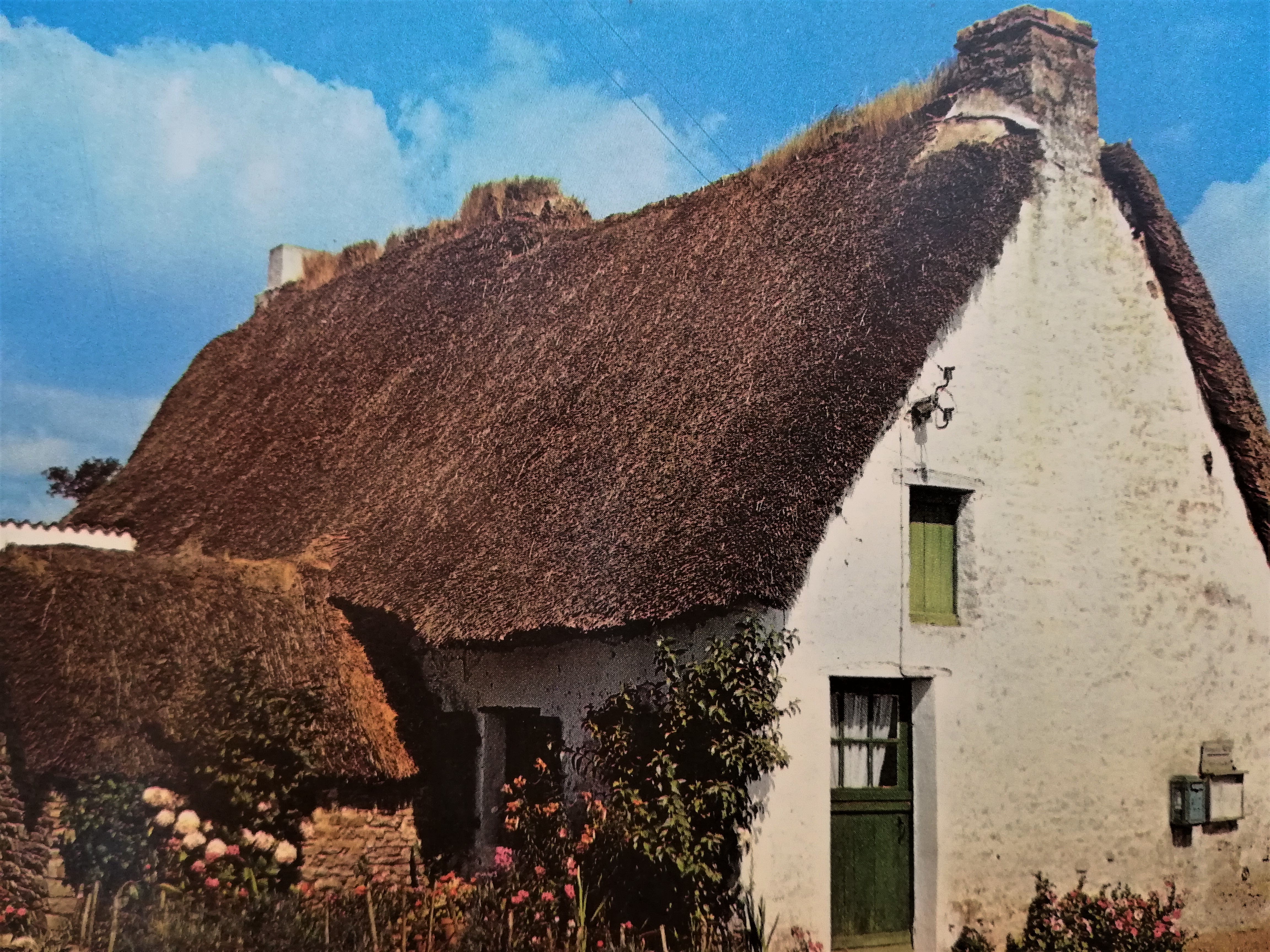
I saw a thatcher working in Brittany. I took no pictures but he was tying on water reed and would use no ridge rolls, allowing the top course to lose pitch. Concrete, rather than the traditional clay and iris garden would be used as a water-shed. Here are some old Brittany cottages…

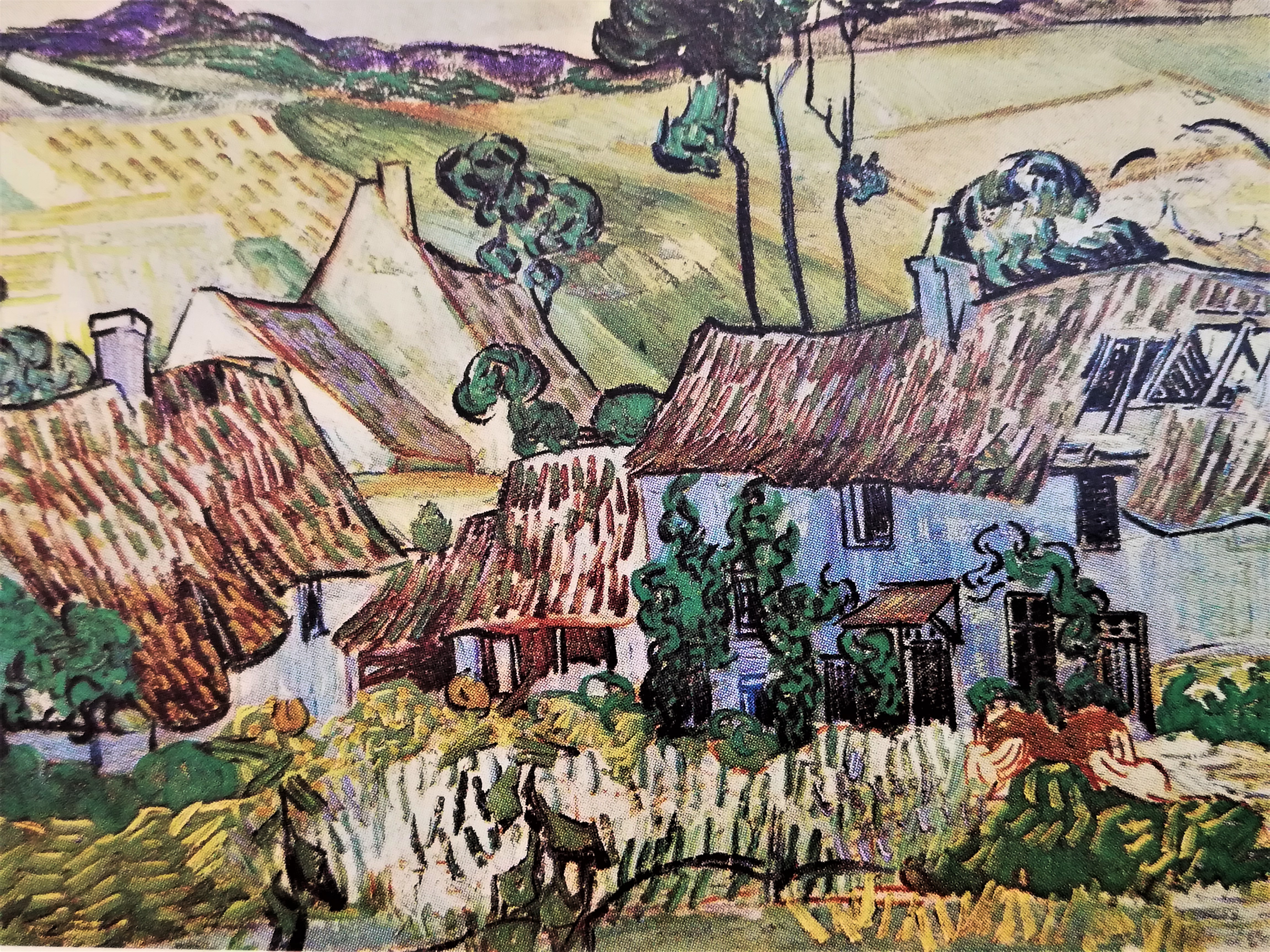
And Van Gogh paints a scene showing that thatch always got neglected..
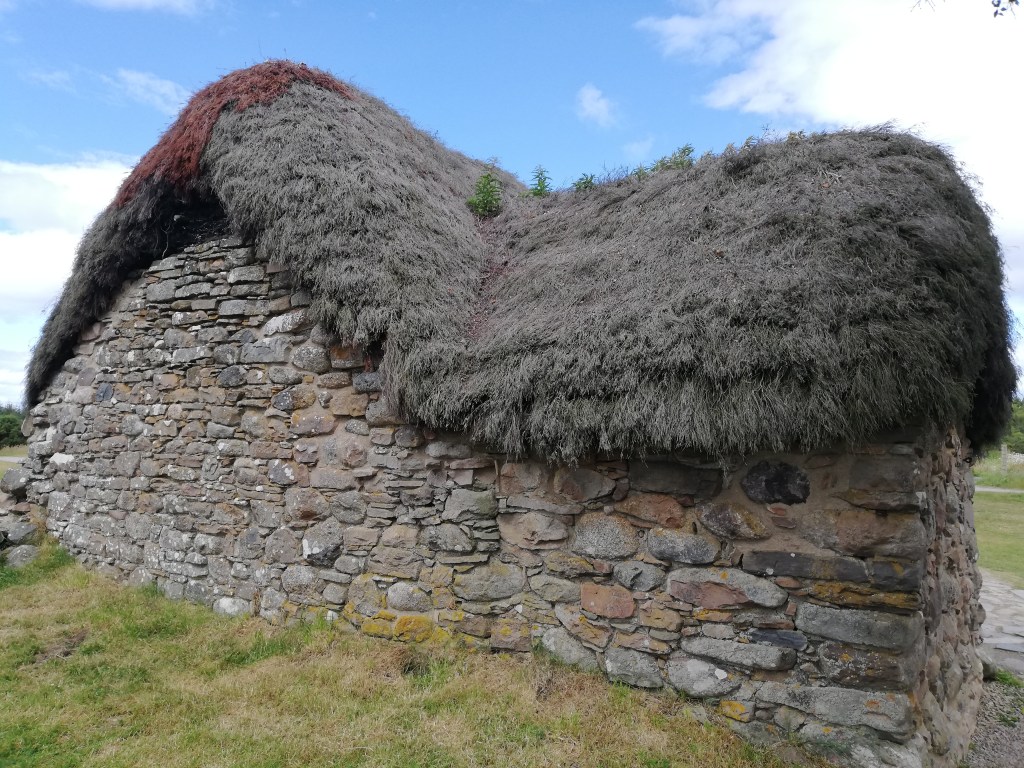
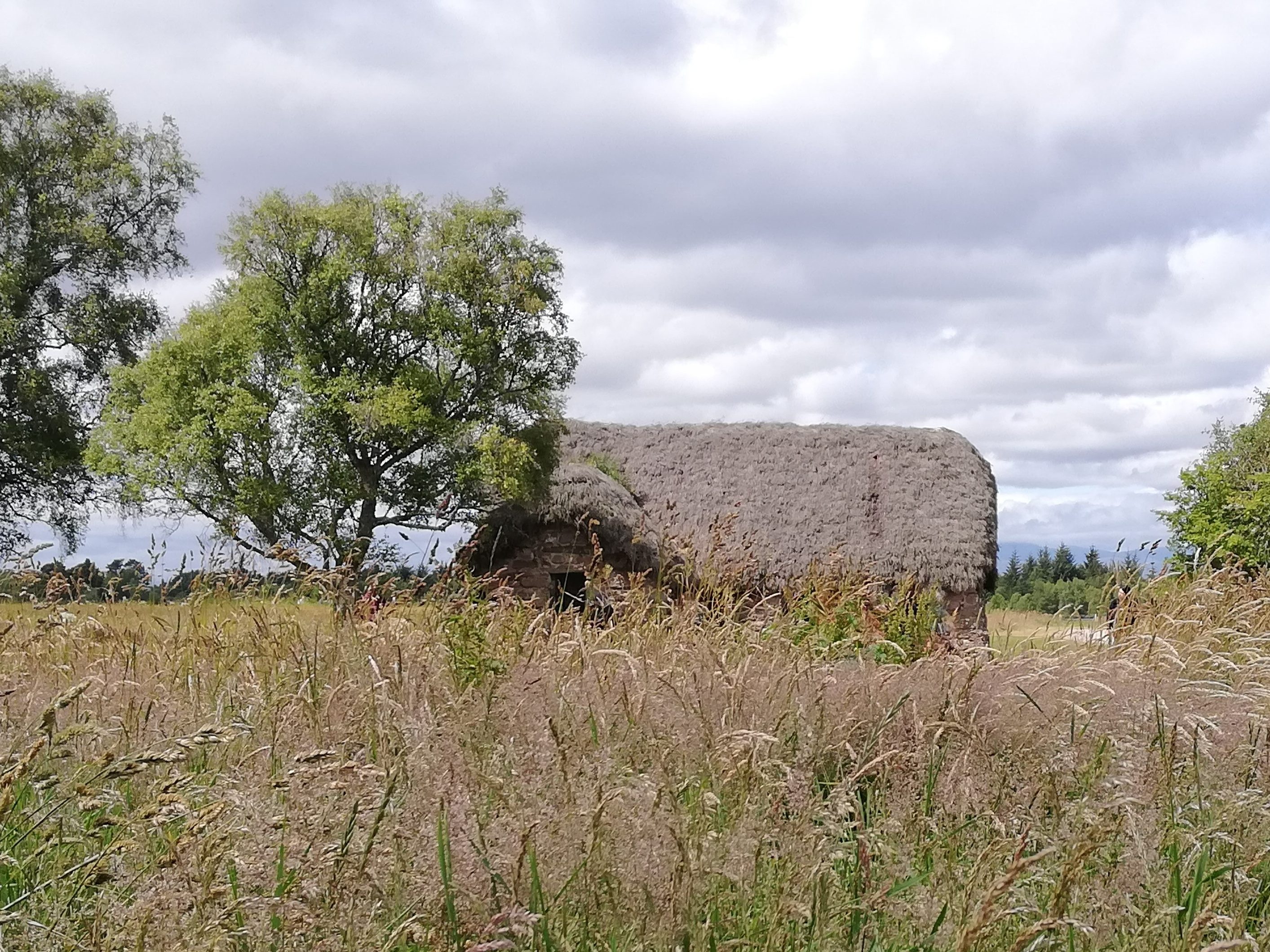
Next an authentic example of Scottish straw thatching . My best guess for the method is that a layer of turf was laid on the roof structure as a background surface, then straw was pushed loosely up into it with a forked stick so that all the ends shed rain. The weighted net would hold everything tight. The net would likely be removed annually for repairs with whatever straw was available.
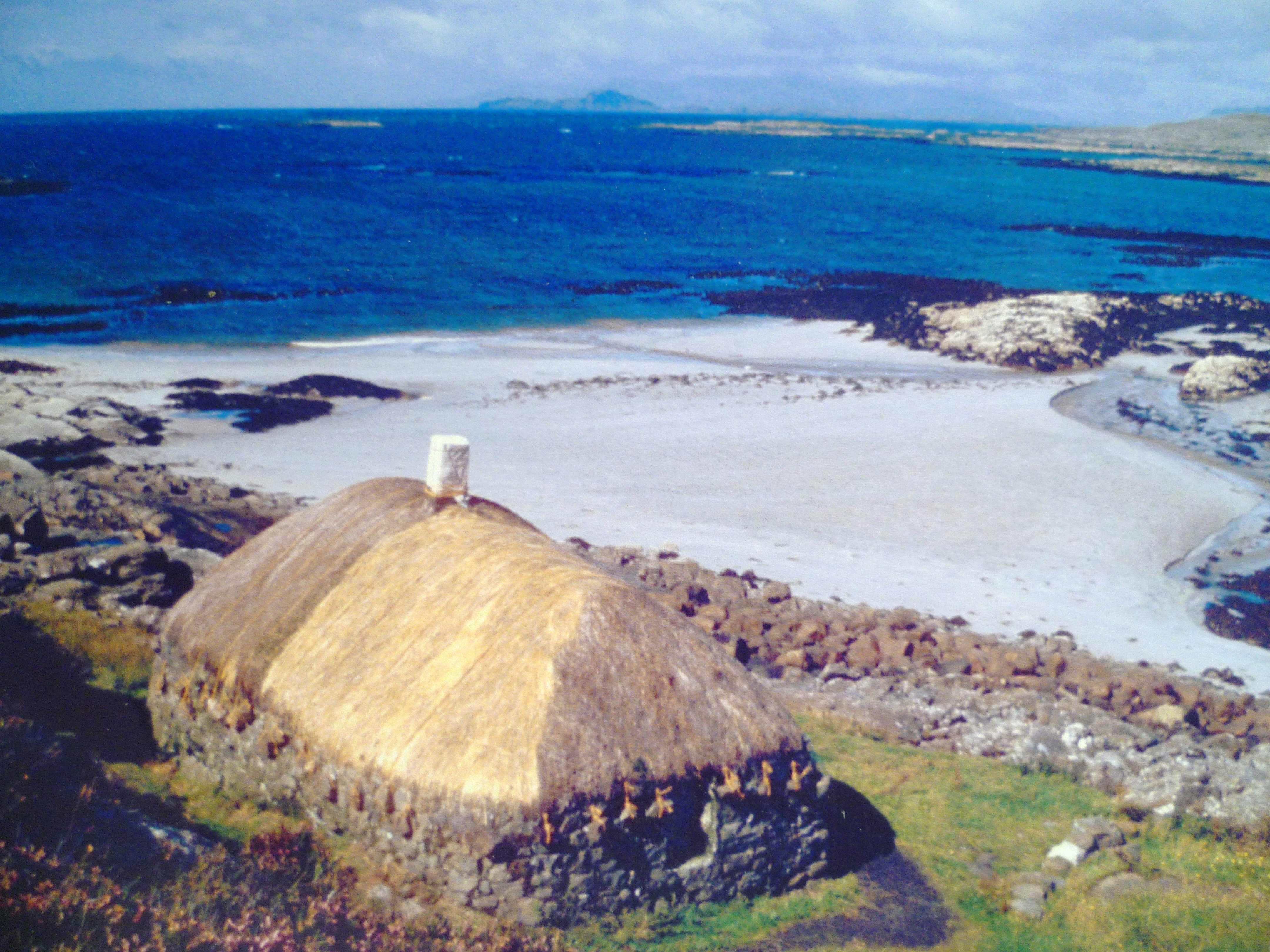
I have seen some soulless attempts to re-create the pragmatic beauty of these roofs with water reed and rocks hanging pointlessly from the eaves and even with hay sandwiched between two layers of wire netting.
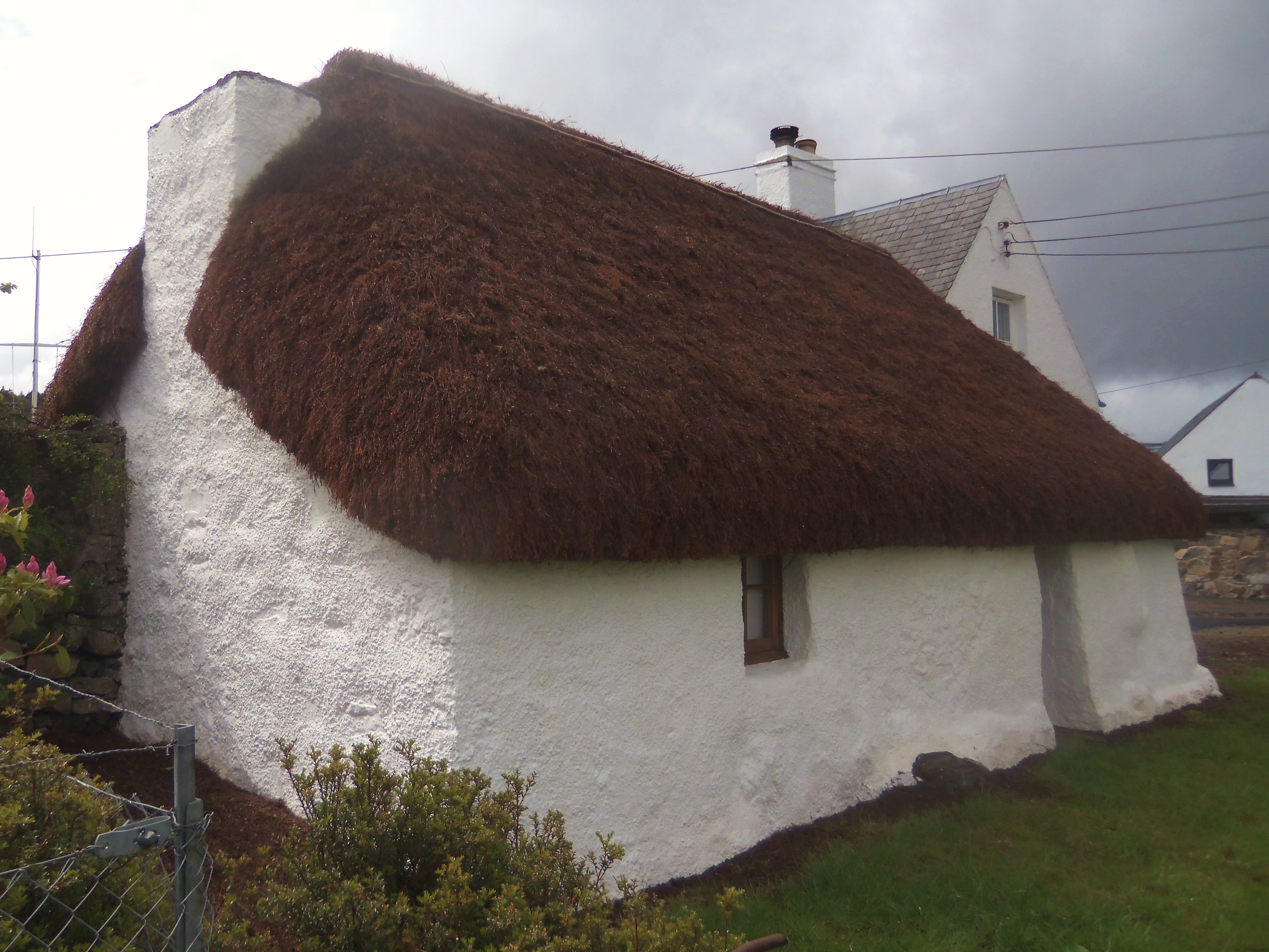
Heather was extensively used as a roofing material. I imagine it is quite hardy, though difficult to lay at the density required. This one is in Plockton.

 kendalthatcher.net